Grey Room

Interiors Turning Off and On: Buckminster Fuller, Airborne Architecture, and Special Economic Zones in China, 1979-1989

Jia Weng

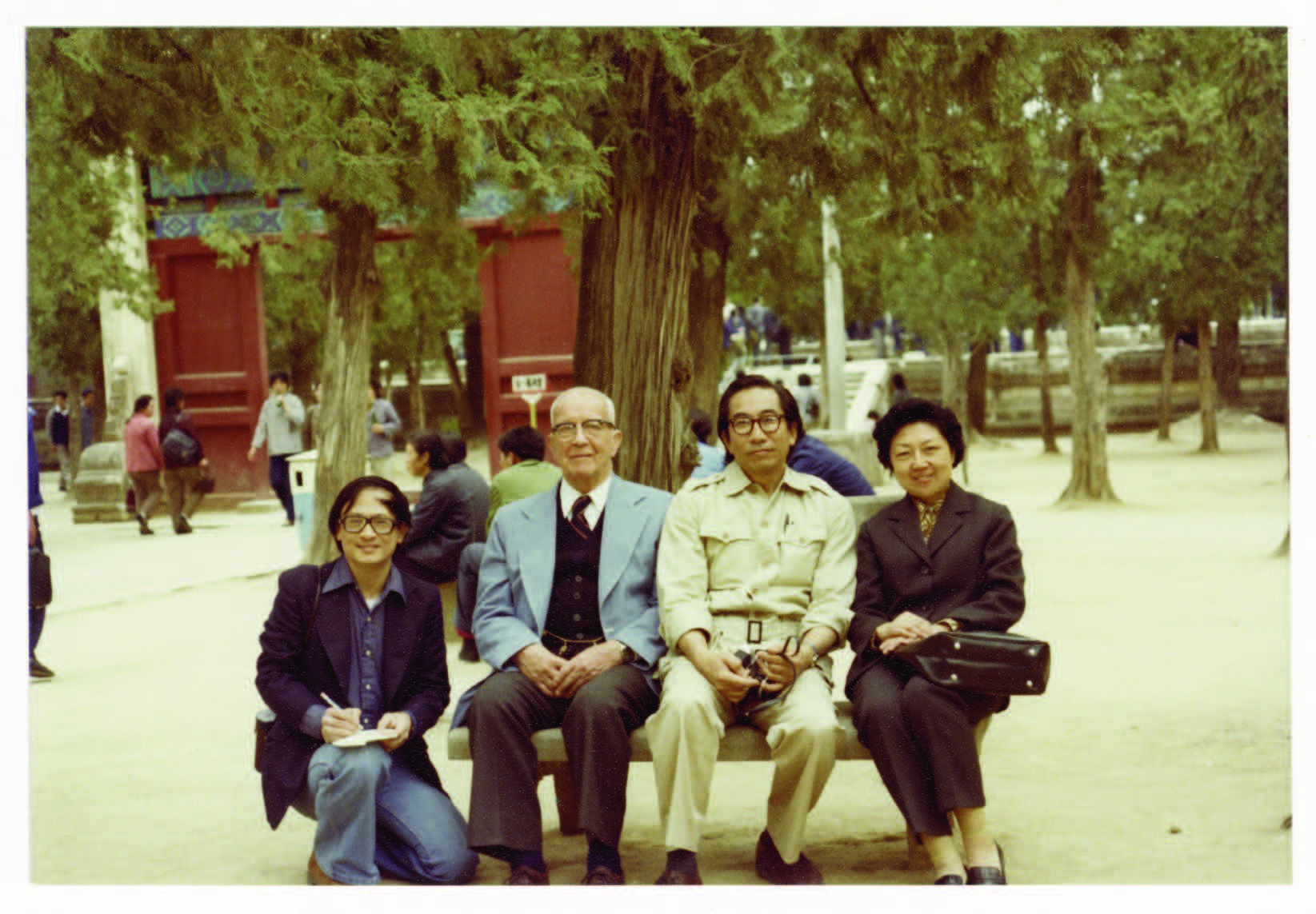
Photographer unknown, Buckminster Fuller and Shoji Sadao in Beijing, 1979. Photo from M1090, Buckminster Fuller Papers, Series 14, Box 3, Folder 7. Courtesy of the Department of Special Collections, Stanford University Libraries.

In May 1979, American architects R. Buckminster Fuller and Shoji Sadao visited China for three weeks as guests of the China Merchant Steam Navigation Company (CMSN), a state-owned enterprise under the ministry of communication. At the time, the central government had just made CMSN the developer and owner of Shekou Industrial Zone, China’s first special economic zone (SEZ). Modeled after free trade zones such as Singapore’s Jurong Industrial Park, Shekou—with its relaxed environmental, labor, and financial regulations—became the “test tube” of China’s economic reform. Seeking guidance on development strategies, CMSN invited Fuller and Sadao to design prototypes for floating cities and geodesic domes. Eager to access Hong Kong’s capitalist market and advanced infrastructure, yet unable to purchase land across the border, CMSN envisioned shiplike islands that could suture the geographical divide imposed by the sea through their mobility. They were also drawn to the promise of geodesic domes, whose long-span structure aligned with China’s spatial needs for its Import and Export exhibitions—the state’s key venue for international market engagement since 1957.

See the full .pdf for the free article.

Interiors Turning Off and On: Buckminster Fuller, Airborne Architecture, and Special Economic Zones in China, 1979-1989

Jia Weng

Close